This question deserves a straight answer rather than reassurance, and as a Turkish-trained prosthodontist who treats UK patients I am aware that I have an obvious interest in how it is answered. So let me be direct about both sides of it.
Dental treatment in Turkey is not inherently unsafe. Neither is it inherently safe. The country contains some of the most experienced full-arch implant clinicians working anywhere, because the volume of that work in Turkey is exceptionally high — and for exactly the same reason it also contains operations optimised for throughput rather than outcome. Both are real. Which one you end up in is largely determined by what you check beforehand.
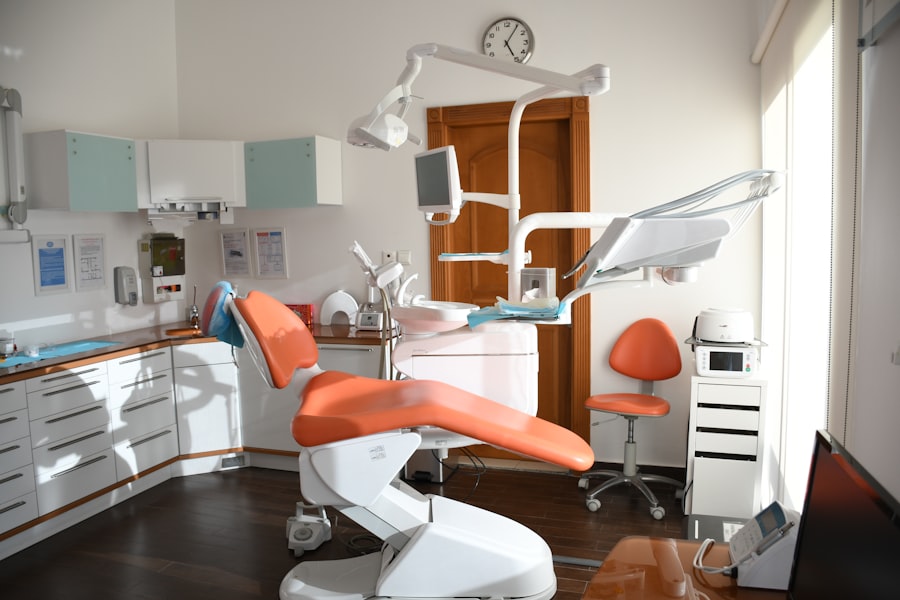
Standards vary enormously between clinics — the country is not the variable
How Dental Regulation Works in Turkey
Turkish dentists complete a five-year undergraduate degree at a dental faculty, which is a standalone qualification rather than a postgraduate route. Graduates must be licensed by the Turkish Ministry of Health in order to practise, and clinics themselves are separately licensed and inspected.
Specialist training is a further postgraduate qualification obtained through the national specialty examination, in disciplines including prosthodontics, oral surgery, periodontology, endodontics and orthodontics. A clinician holding a doctorate in prosthodontics has completed several years of supervised training and research beyond the dental degree — the same structural distinction that separates a specialist from a general dental practitioner in the UK.
My own qualifications are a dental degree from Ege University in İzmir and a doctorate in prosthodontics from Akdeniz University in Antalya, with twelve years in practice. I mention this not as a credential display but because it is precisely the information you should be requesting from any clinician you are considering, and you should expect to receive it without hesitation.
What Turkey does not have is a single public register comparable to the GDC in the UK, which is genuinely inconvenient for patients trying to verify someone from abroad. That is why the verification burden falls on direct questions to the clinic, and why an evasive answer to those questions is itself the answer.
What Actually Goes Wrong
UK dentists do see remedial cases from treatment abroad, and it is worth being precise about what those cases usually involve, because the real risks are not the ones patients typically worry about.
Over-preparation of healthy teeth
This is the most common and the most consequential problem. A patient asks for a whiter, straighter smile and is given full crowns on twenty teeth. Crowning requires removing 1.5–2mm of tooth structure circumferentially, whereas veneers require 0.3–0.7mm from the front surface only and composite bonding may require none at all. When healthy teeth are crowned unnecessarily, that structure is gone permanently, the risk of pulp damage and subsequent root canal treatment rises, and the patient is committed to replacing those crowns every fifteen years or so for life.
Crowns are entirely appropriate for teeth that are heavily restored or structurally compromised. They are not appropriate as a default cosmetic solution for sound teeth. If a treatment plan proposes crowns on healthy teeth without explaining why a more conservative option was ruled out, that is the single biggest warning sign in cosmetic dental tourism. The comparison is set out in veneers vs composite bonding.
Unnamed implant systems
Established implant systems carry long-term published data and, just as importantly, worldwide component availability. If an abutment fractures or a screw strips in six years, a UK dentist must identify the system and obtain matching parts. With an unbranded implant that may be impossible, and the practical consequence is that the implant has to be removed and the site rebuilt — a cost far exceeding whatever was saved. Always obtain the manufacturer and model in writing and keep the implant passport.
Untreated gum disease
Restorations placed over active periodontal disease will fail, regardless of how well they are made. Periodontal assessment and stabilisation should precede any restorative work. Where a treatment plan goes straight to crowns or implants with no mention of periodontal status, something has been skipped.
Compressed treatment timelines
Full-mouth rehabilitation completed in four days is a warning sign, not a selling point. Occlusion — how the teeth meet — needs verification, adjustment and often a period of settling. Rushed full-mouth work is a frequent cause of persistent bite discomfort, jaw and muscle pain, and fractured ceramic within the first year. If there is an existing joint or muscle problem, it should be assessed first; see TMJ and temporomandibular disorders.
No aftercare pathway
Treatment finishing at the airport is not treatment finishing. Implant cases in particular need review, and every patient needs someone to see them if a problem develops at home.
Warning Signs Before You Book
- You cannot get the name of your treating clinician in writing. If the clinic will only refer to "our specialist team", you do not know who will treat you.
- A treatment plan is issued from photographs alone. Implant planning without a CBCT scan is not planning. Restorative planning without radiographs and a periodontal assessment is guesswork.
- Crowns proposed on healthy teeth with no explanation of why veneers or bonding were ruled out.
- Fixed package pricing — "20 crowns, hotel and transfers included" — sold before anyone has examined you. Pricing that precedes diagnosis tells you the diagnosis is not driving the plan.
- Pressure to pay a deposit quickly to hold a discount. Legitimate clinics do not run countdown timers on surgery.
- The implant system will not be named.
- No written warranty, or one with unclear exclusions and no answer on who funds a return trip.
- Savings of 80% or more against UK fees. A 50–60% saving is explainable by operating costs; far beyond that, something is being substituted. See dental costs: UK vs Turkey.
- Reviews that are exclusively perfect and recent, with no detail about the treatment process itself.
What a Properly Run Pathway Looks Like
The verification test is straightforward: does the clinic behave like a dental practice or like a travel agency?
- Consultation before commitment. An online consultation with the clinician who will treat you, reviewing your photographs, radiographs and medical history, with no deposit taken to obtain it.
- Diagnosis before pricing. Radiographic and periodontal assessment first; the plan follows the diagnosis, and the price follows the plan.
- A written, itemised treatment plan. Which teeth, which procedure on each, which materials by manufacturer, how many visits, what is excluded, and what alternatives were considered and why they were not chosen.
- Realistic scheduling. Time allowed for laboratory work, for try-in, and for occlusal adjustment. If the timeline looks compressed, ask what has been left out.
- A named clinician throughout. The person who plans the case should be the person who performs it.
- Records to take home. Full clinical notes, radiographs, implant passport, material specifications and shade records — everything a UK dentist would need.
- A defined aftercare arrangement. Who reviews you in the UK, what the warranty covers, what voids it, and who pays for a return trip.
A clinic that does all seven is not necessarily cheap. It is, however, behaving the way a dental practice is supposed to behave.
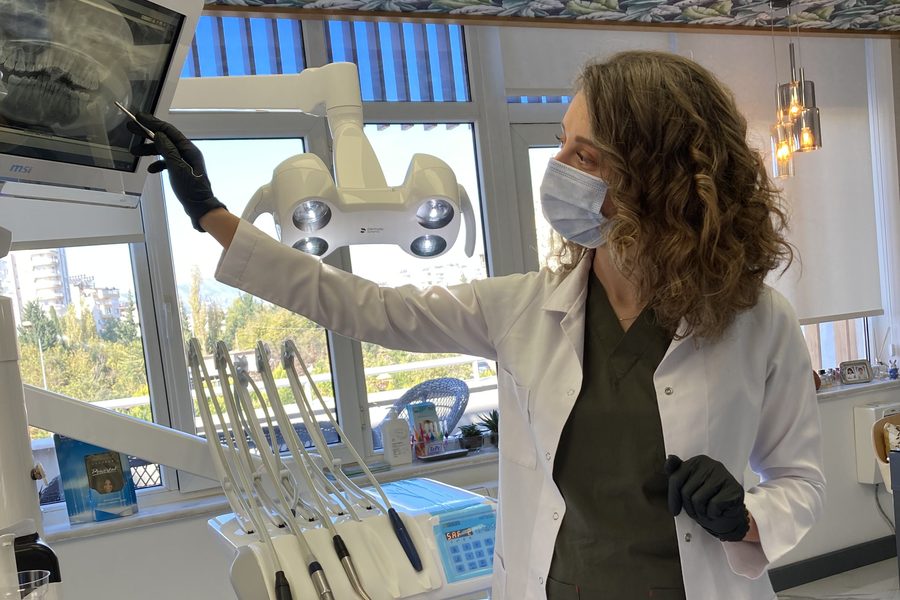
Diagnosis precedes pricing — radiographic assessment is not optional
Arranging UK Aftercare
This is the part most often left until it is too late, and it should be settled before you fly.
Confirm with your own UK dentist that they are willing to provide routine examinations and hygiene care following treatment abroad. Most will. Be aware that NHS dentists are generally not obliged to maintain or repair private work carried out overseas, and some decline to take it on, so ask specifically rather than assuming.
Bring home a complete record set — clinical notes, pre- and post-treatment radiographs, the implant passport with manufacturer and model, ceramic material specifications and shade records. Without these, a UK clinician dealing with a problem in five years is working blind.
Finally, establish what happens if something needs attention. Ask what the warranty covers and for how long, what invalidates it, whether remedial treatment is provided free of charge, and who bears the cost of the flights. Get the answers in writing before you pay a deposit, not afterwards.
An Honest Summary
Dental treatment in Turkey carries real risk and real benefit, and neither should be dismissed. The benefit is that extensive treatment which is financially out of reach for many UK patients becomes achievable, delivered by clinicians who in the case of full-arch implant work often have considerably more case experience than their UK counterparts. The risk is that the same market conditions have produced high-volume operations where commercial incentives override clinical judgement, and the damage they do — particularly over-preparation of healthy teeth — is permanent.
The country is not the variable. The clinician is. If a clinic gives you their name, their qualifications, a diagnosis before a price, a written itemised plan, named materials and a defined aftercare pathway, you are in a reasonable position to proceed. If it will not, no price is low enough to justify it — and that test applies just as much to a practice in the UK.
If you are weighing this up, a consultation with no cost and no obligation is a reasonable next step, whether or not you go on to be treated here. Treatment details are in the articles on dental implants, All-on-4 vs All-on-6, crowns and veneers, and completed cases are in the gallery.
Frequently Asked Questions
Is dental treatment in Turkey safe?
It can be, and often is — but safety is determined by the individual clinician, not the country. Turkish dentists complete a five-year degree and must be licensed by the Ministry of Health, with specialist training as a further postgraduate qualification. The risk lies with high-volume package operations, and the verification you do before booking is what decides your outcome.
How do I verify a Turkish dentist's qualifications?
Ask for their full name, Ministry of Health licence, dental school and graduation year, and any postgraduate specialist qualification. Confirm in writing that this named clinician will treat you throughout. A clinic that will not name your dentist before you travel has answered the question.
What is the most common problem with dental work abroad?
Over-preparation — healthy teeth cut for full crowns when veneers or bonding would have sufficed. That tooth structure does not come back, and the risk of later root canal treatment rises significantly. It is also the most avoidable problem, because it is visible in the treatment plan before you travel.
Are the materials the same as in the UK?
In a properly run clinic, yes — implants and ceramics are globally traded and cost broadly the same in both countries, with the saving coming from operating costs. The exception is very cheap packages, which sometimes substitute unbranded implants with no long-term data and no worldwide parts availability. Get the manufacturer and model in writing.
Who looks after me when I get home?
Arrange this before you travel. Confirm your UK dentist will provide routine care, take home full records including the implant passport, and get the warranty terms and return-trip responsibility in writing.
Can I claim compensation if treatment abroad goes wrong?
Pursuing a claim across jurisdictions is difficult, slow and expensive, and you should not rely on it as a safety net. Treat the quality of the clinic and the clarity of the written warranty as your actual protection, and check whether your travel insurance covers complications of planned treatment — most standard policies do not.