A dental crown — also called a cap — is a full-coverage restoration that encases the entire visible portion of a tooth above the gumline. It is indicated when a tooth has suffered structural compromise that cannot be adequately addressed by a conventional filling: extensive carious lesion, fracture, cracked tooth syndrome, post-endodontic treatment, or as the prosthetic component on a dental implant. As a prosthodontist — a specialist in the restoration and replacement of teeth — I select crown materials and preparation designs based on each tooth's location, the degree of remaining tooth structure, the patient's occlusion, and aesthetic requirements, applying the principles of evidence-based restorative dentistry throughout.
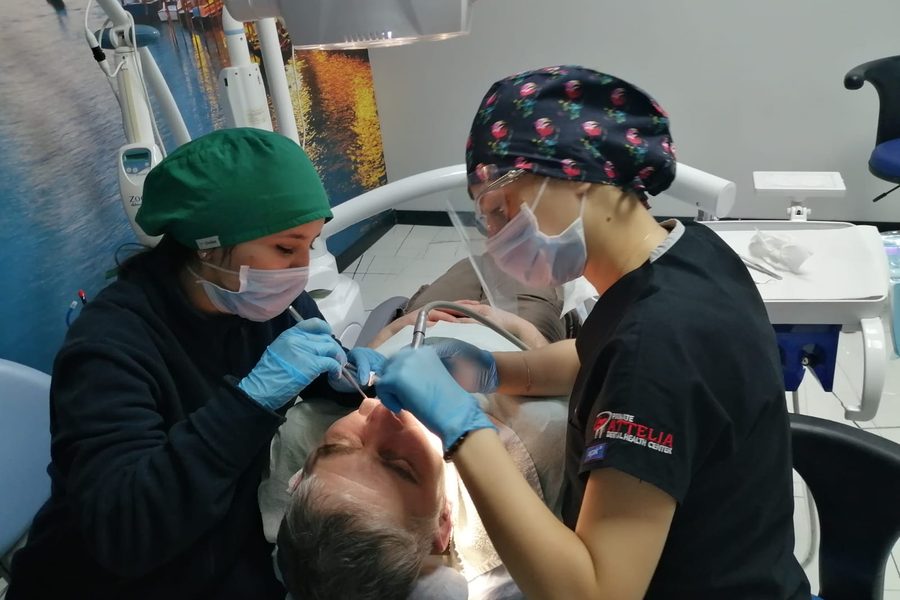
Dental crown consultation — Dr. Dt. Tuba Akcakus Battal
Understanding the differences between crown materials, preparation requirements, and cementation protocols is essential to making the right clinical and economic decision. The following guide covers everything patients in the UK — and those considering treatment in Turkey — need to know before committing to crown treatment.
Crown Materials Compared
Full-Contour Zirconia (Y-TZP)
Full-contour monolithic zirconia — yttria-stabilised tetragonal zirconia polycrystal (Y-TZP) — is the current clinical gold standard for posterior dental crowns and implant-supported restorations. It offers a flexural strength of approximately 900–1200 MPa, exceptional fracture toughness, and outstanding biocompatibility. Critically, it is milled via CAD/CAM from pre-sintered zirconia pucks to a precision-fit restoration in a single workflow, then sintered in a high-temperature furnace to full density. The resulting crown requires minimal reduction of tooth structure compared to PFM, supports occlusal thicknesses as low as 0.5mm without risk of fracture, and resists wear against opposing natural dentition. Earlier concerns about monolithic zirconia's opacity have been substantially addressed by the development of multi-layered translucent zirconia grades (3Y, 4Y, 5Y), which provide natural colour gradients from gingival to incisal and are now suitable for anterior aesthetic crowns as well as posterior function.
Porcelain-Fused-to-Metal (PFM)
PFM crowns — a feldspathic porcelain veneering layer fused over a cast metal substructure — were the dominant crown system in restorative dentistry for several decades and remain a reliable, well-documented option. The metal substructure provides strength and fit precision; the porcelain overlay provides aesthetics. Key clinical limitations include: the need for a greater tooth reduction (1.5–2mm axially, 2mm occlusally) than full-contour zirconia; the risk of porcelain chipping (the most common long-term complication); and the visible greyish metal margin at the gingival margin that can show through thin gingival tissue or following gingival recession. In practice, PFM crowns are now largely being replaced by full-contour zirconia for posterior teeth and IPS e.max for anterior crowns, except in specific situations where the proven longevity of the metal coping is clinically advantageous.
IPS e.max Lithium Disilicate
IPS e.max lithium disilicate ceramic (Ivoclar Vivadent) offers a flexural strength of approximately 400 MPa — significantly lower than zirconia but substantially higher than feldspathic porcelain — with excellent optical properties that allow natural characterisation of the restoration. It is the material of choice for anterior single-unit crowns where maximum aesthetics are the priority. Pressed e.max is fabricated by pressing pre-ceramic glass-ceramic blocks into refractory moulds under heat and pressure; milled (CAD/CAM) e.max is milled from pre-crystallised blocks and subsequently crystallised in a furnace. Both routes deliver equivalent clinical performance. e.max is not recommended for posterior crowns in patients with heavy occlusal loading or parafunctional habits, where zirconia's superior fracture resistance makes it the more prudent choice.
All-Ceramic CEREC Same-Day Crowns
CEREC (Chairside Economical Restoration of Esthetic Ceramics) is a CAD/CAM workflow that allows the design and milling of ceramic crowns within a single clinical appointment. An intraoral scanner captures the prepared tooth, proprietary software designs the crown, and an in-office milling unit fabricates it from a ceramic block — typically a hybrid nano-ceramic, feldspar-reinforced ceramic, or a zirconia-reinforced lithium silicate (e.g. VITA Suprinity or Celtra Duo). Same-day crowns are convenient and eliminate the provisional crown phase, but material choices are currently more limited than lab-fabricated options and the highly polished monolithic milled surface may initially wear opposing enamel more aggressively than a glazed ceramic surface.
When Is a Crown Necessary?
A crown is the appropriate restoration in several clinical situations:
- Cracked tooth syndrome: A tooth with an incomplete or complete fracture that causes pain on biting. A crown binds the cusps together and prevents the crack from propagating to the pulp or root, which would require extraction.
- Post-endodontic treatment: A root-filled (root canal treated) tooth loses structural integrity due to the access cavity and any carious removal. Posterior root-filled teeth in particular require crown coverage to prevent cusp fracture under occlusal loading.
- Large carious lesion or failed restoration: When remaining tooth structure is insufficient for a filling — typically less than 50% of the original crown — a crown is required to restore function and protect the tooth from fracture.
- Bridge abutment: A crown-form restoration is placed on a natural tooth anchor (abutment) to support a fixed bridge replacing one or more missing teeth.
- Implant crown: The prosthetic crown delivered on a dental implant after osseointegration, restoring the visible tooth above the implant abutment.
The Crown Preparation and Delivery Procedure
Crown preparation follows a precise clinical protocol designed to remove sufficient tooth structure to accommodate the chosen material while preserving maximum remaining tooth substance.
- Assessment and treatment planning: Periapical radiograph to assess root and pulp health, vitality testing, and discussion of material choice based on the tooth's position and the patient's occlusal demands and aesthetic priorities.
- Preparation: Under local anaesthesia, the tooth is reduced by 1.5–2mm circumferentially and 2mm occlusally/incisally using a high-speed diamond bur. The preparation is finished with a smooth shoulder or chamfer margin at the gingival line.
- Impression or digital scan: A precise record of the prepared tooth and adjacent teeth is captured either by a conventional polyvinyl siloxane (PVS) impression or a digital intraoral scan, and sent to the dental laboratory or CAD/CAM milling unit.
- Provisional crown: A temporary crown fabricated from PMMA resin is placed to protect the prepared tooth, maintain aesthetics and occlusion, and allow the patient to evaluate the intended shape during the fabrication interval.
- Crown delivery and cementation: At the return appointment, the definitive crown is tried in for fit, occlusion, and aesthetics. Cementation uses either resin-modified glass ionomer cement (RMGIC) for stable preparations with limited adhesive requirements, or a dual-cure resin adhesive (total-etch or self-etch) for all-ceramic crowns requiring maximum bond strength.
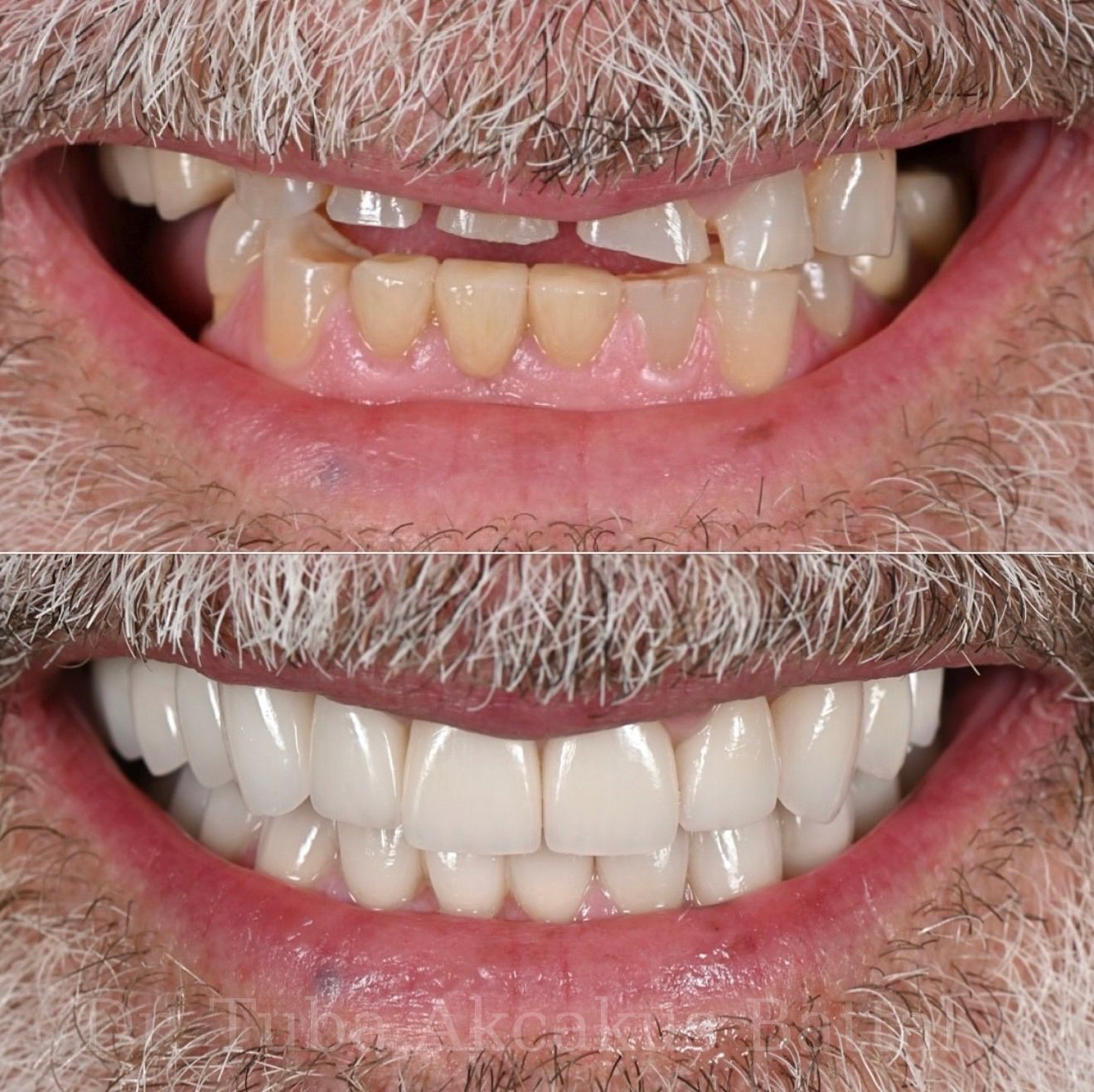
Zirconium crown result — durable, natural-looking restoration
Crowns on Implants
When a crown is delivered on a dental implant rather than a natural tooth, the clinical principles are similar but the substructure differs. An implant abutment — either prefabricated in titanium or custom-milled in titanium or zirconia — connects the crown to the implant fixture. The crown can be screw-retained (accessed via a screw channel on the occlusal surface) or cement-retained. Screw-retained implant crowns are generally preferred for their retrievability and avoidance of residual cement complications. Full-arch fixed bridges on All-on-4 and All-on-6 implants use the same zirconia framework principles, scaled to an arch-spanning prosthesis.
Clinical Longevity
The landmark systematic review by Pjetursson et al. (2007) — a comprehensive meta-analysis examining survival data for single-unit fixed dental prostheses — reported a 5-year survival rate of 96% and a 10-year survival rate of approximately 89% for single-unit crowns on natural teeth. Failure causes include caries at the crown margin, pulp pathology requiring endodontic treatment, crown fracture, and decementation. Zirconia crowns in more recent systematic reviews consistently report superior fracture resistance compared to PFM and IPS e.max, making them the preferred choice for heavily loaded posterior teeth. Implant-supported crowns report 5-year survival rates of 96–98% in systematic review data, with failures primarily attributable to implant loss rather than crown failure per se.
Frequently Asked Questions
How long does a dental crown last?
Systematic review data reports 5-year survival rates of approximately 96% for single-unit crowns on natural teeth, with 10-year rates around 89%. In practice, well-maintained crowns — particularly full-contour zirconia on posterior teeth — frequently last 15–20 years or more. Factors affecting longevity include the underlying tooth's health, oral hygiene, parafunctional habits, and the quality of the original cementation and fit.
Does getting a crown hurt?
Crown preparation is carried out under local anaesthesia and is not painful. Some temperature sensitivity is normal in the first few days following preparation and usually resolves once the definitive crown is cemented. If pain is persistent or spontaneous, this should be assessed promptly — it may indicate pre-existing pulp pathology that requires endodontic treatment before crowning. A root canal treatment, if needed, does not prevent a crown from being placed and should not be seen as a complication but as part of the appropriate treatment sequence.
What is the difference between a crown and a veneer?
The distinction is straightforward: a veneer covers only the front (labial) surface of a tooth and requires minimal preparation (0.3–0.5mm). It is appropriate for aesthetic correction of structurally sound or minimally chipped anterior teeth with adequate enamel. A crown covers the entire tooth circumferentially (360°) and requires 1.5–2mm of reduction all round. It is appropriate for teeth with substantial structural compromise — large restorations, cracks, post-endodontic treatment, or heavy occlusal loading. Placing a veneer on a compromised tooth under-treats the clinical problem; placing a crown on an intact tooth for cosmetic reasons unnecessarily sacrifices healthy tooth structure.
What does a dental crown cost in the UK vs Turkey?
In the UK, a dental crown typically costs £700–£1,500 per tooth, with zirconia and IPS e.max crowns at the higher end of that range. In Antalya, the same ceramic materials — milled or pressed by experienced technicians using the same CAD/CAM systems — are available at 50–60% of UK prices. For patients requiring multiple crowns, the total saving is proportionally greater. Transparent, itemised cost estimates are provided at the initial consultation so you can plan accurately.
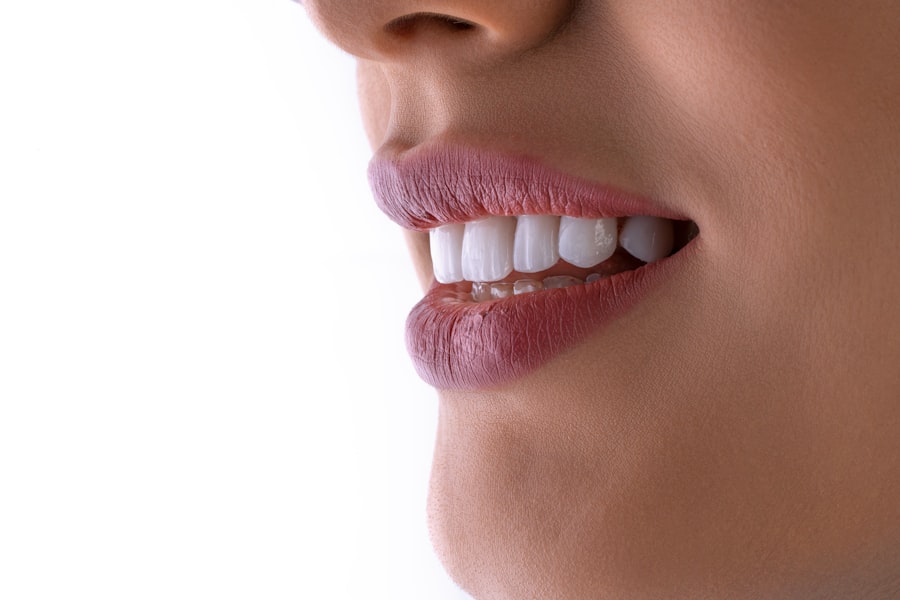
Zirconia crown — strength and natural appearance