Composite bonding involves the sculpting and bonding of tooth-coloured resin directly onto the tooth surface to improve its shape, size, colour, or surface texture. Unlike porcelain veneers, which are fabricated in a laboratory and require a preparation appointment, direct composite bonding is completed entirely chair-side in a single visit. The dentist or prosthodontist applies composite resin in incremental layers, light-curing each layer before adding the next, and then shapes and polishes the completed restoration to mimic the optical properties of natural enamel and dentine.
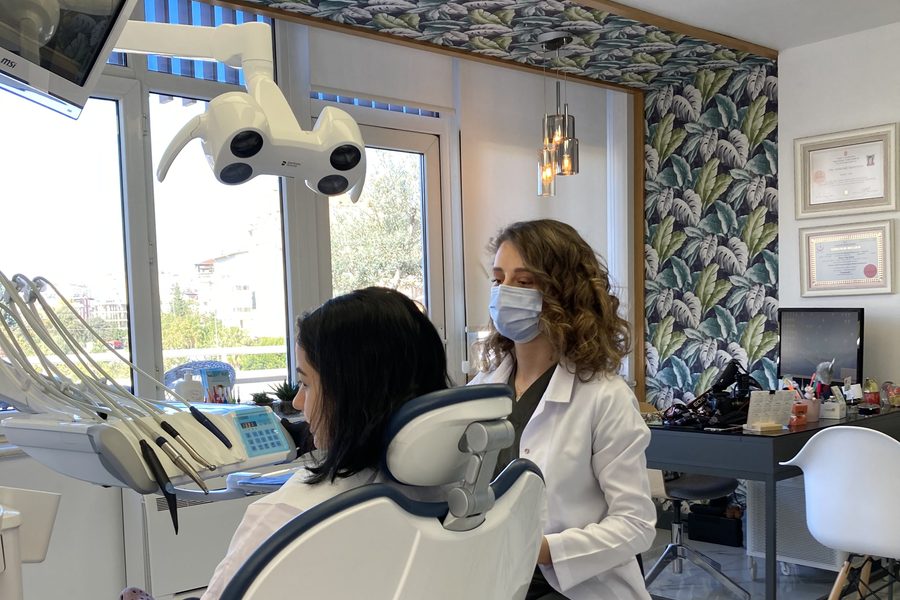
Composite bonding consultation — Dr. Dt. Tuba Akcakus Battal
As a specialist prosthodontist, I approach composite bonding with the same attention to detail applied to my laboratory-fabricated restorations: precise shade matching using a spectrophotometer where appropriate, anatomical layering using enamel-mimicking and dentine-mimicking composites, and high-lustre finishing that maximises polish retention. Whether you are correcting a single chipped tooth or planning a full smile makeover with composite bonding across all anterior teeth, the process requires a detailed diagnostic assessment and smile design to ensure the outcome meets your functional and aesthetic goals.
The Science of Composite Resin
Bis-GMA and UDMA Matrix Systems
All contemporary dental composites are based on a polymer matrix — most commonly bisphenol A-glycidyl methacrylate (Bis-GMA), introduced by Rafael Bowen in 1962, or urethane dimethacrylate (UDMA). These monomers form the organic backbone of the composite and undergo free-radical polymerisation when exposed to the blue-light wavelength emitted by a dental curing lamp (typically 460–480nm). Bis-GMA offers high viscosity and low polymerisation shrinkage, reducing the internal stress that can cause marginal gap formation and post-operative sensitivity. UDMA is more flexible and is often blended with Bis-GMA or Bis-EMA (bisphenol A ethoxylated dimethacrylate) to modulate the mechanical properties of the set composite. The degree of conversion — the proportion of monomer double bonds that undergo polymerisation — directly affects the mechanical strength and colour stability of the restoration; optimal cure requires adequate light intensity, correct exposure time, and appropriate material thickness.
Nano-Hybrid Filler Technology
The filler component of composite resin — inorganic particles of silica, zirconia, barium glass, or aluminium silicate — is dispersed within the polymer matrix and is responsible for the composite's mechanical properties and polishability. Early composites used large macro-fill particles (10–100 microns), which provided strength but left a rough surface prone to staining. The development of nano-hybrid composites, which combine sub-micron aggregated filler clusters with nanoparticles (20–75nm), achieves an optimal balance of wear resistance, flexural strength, and surface smoothness. Leading nano-hybrid composites such as 3M Filtek Supreme Ultra, Ivoclar Tetric EvoCeram, and GC Essentia offer high polishability and excellent colour stability compared to earlier formulations, significantly improving the long-term aesthetic durability of direct composite bonding restorations.
Shade Matching and Layering Techniques
The optical realism of composite bonding depends critically on shade selection and layering strategy. Natural teeth have optical complexity: the inner dentine is more opaque and saturated in colour, while the outer enamel is translucent and scatters light. To replicate this, skilled clinicians use a dentine-shade composite for the inner mass and an enamel-shade composite for the outer layer — recreating the natural light transmission through different tooth depths. Characterisation composites in amber and grey can be used to mimic natural incisal translucency or halo effects. The final polishing sequence — progressively finer polishing discs or cups followed by a high-gloss polishing paste — reproduces the specular and diffuse reflectance balance of natural enamel.
What Composite Bonding Can Treat
Composite bonding is a remarkably versatile treatment modality, addressing a wide range of cosmetic and minor restorative concerns:
- Chips and fractures: Fractured incisal edges and labial chips are the most common indication. Composite can rebuild tooth contour precisely, blending seamlessly with the natural tooth.
- Diastema closure: Gaps between upper central incisors or other anterior teeth can be closed by adding composite to the mesial (adjacent) surfaces of the flanking teeth — without any reduction of the natural tooth.
- Mild discolouration: Surface or mild intrinsic staining that does not respond adequately to whitening can be masked by opaque or dentine-tinted composites.
- Shape and length correction: Short or worn incisors can be lengthened; irregularly shaped lateral incisors can be broadened; ovoid or conical tooth shapes can be corrected to more ideal proportions.
- Mild spacing: Minor irregularities and mild crowding impressions can be corrected optically by reshaping individual tooth surfaces with composite.
The Bonding Procedure
Direct composite bonding is completed in a single appointment, typically without local anaesthesia when no preparation is required.
- Shade selection: The shade is selected under standardised lighting using a visual shade guide or spectrophotometer, checking against a moist tooth to replicate in-vivo hydration. Enamel and dentine shades are selected separately for layered cases.
- Enamel micro-etching: A light surface etch with 37% phosphoric acid for 15–30 seconds on the enamel surface creates micro-porosity for resin infiltration. On dentine, the etch time is reduced to avoid over-demineralisation. A bonding agent is then applied and light-cured.
- Incremental layering: The dentine shade is applied first in thin increments (maximum 2mm per layer to ensure full light penetration and polymerisation), sculpted to the desired internal form, then cured. Enamel shades and characterisation composites are then added and cured in turn.
- Light curing: Each layer is cured for a minimum of 20–40 seconds at an irradiance of at least 1,000 mW/cm² using a modern LED curing lamp.
- Finishing and polishing: The completed restoration is shaped with fine diamond burs, polished with sequential polishing discs (40–30–15 micron) and finishing points, then brought to a high gloss with a composite polishing paste and felt disc.
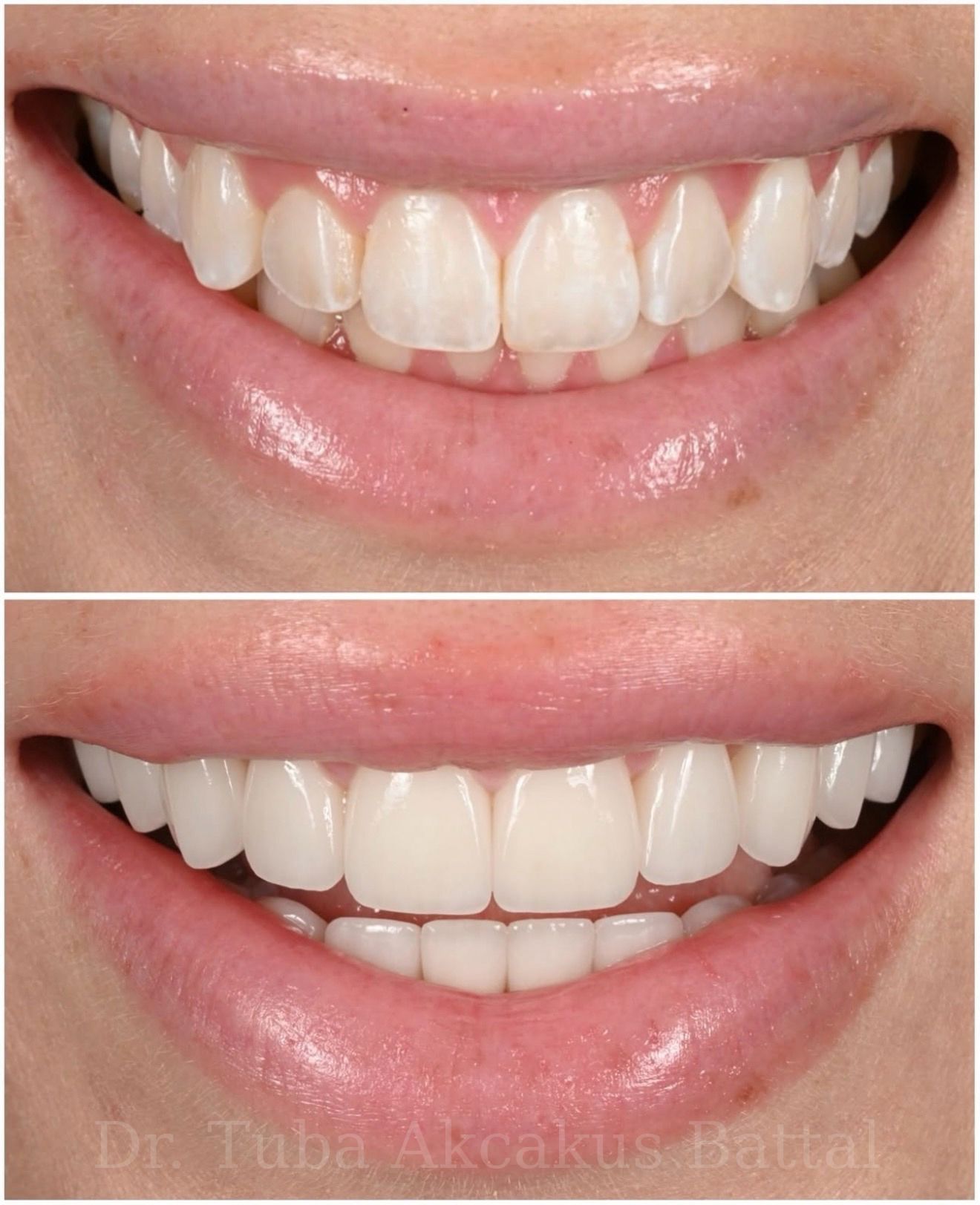
Composite bonding result — same-day smile transformation
Composite Bonding vs Porcelain Veneers
The decision between composite bonding and porcelain veneers depends on the patient's aesthetic ambition, budget, tolerance for maintenance, and whether reversibility is a priority.
| Factor | Composite Bonding | Porcelain Veneers |
|---|---|---|
| Appointments | 1 (same-day result) | 2–3 (preparation + delivery) |
| Tooth preparation | None (in most cases) | 0.3–0.5mm enamel reduction |
| Reversibility | Fully reversible | Irreversible |
| Longevity | 5–7 years average | 10–15+ years |
| Stain resistance | Moderate (polish-sensitive) | Excellent (glazed ceramic) |
| Aesthetics | Very good | Exceptional |
| Cost (UK, per tooth) | £150–£400 | £700–£1,500 |
| Repairability | Chair-side repair possible | Requires new veneer if fractured |
For younger patients, those seeking a conservative first step toward cosmetic enhancement, or those with limited budgets, composite bonding offers excellent value and outcome. For patients committed to the most durable, stain-resistant, and aesthetically refined result — particularly those planning a complete smile design — porcelain veneers represent the superior long-term investment.
Longevity and Maintenance
The average clinical lifespan of direct composite bonding restorations is 5–7 years, though well-maintained bonding under low-stress conditions can last considerably longer. The main causes of clinical failure are marginal discolouration (surface staining at the resin-enamel interface), surface wear (particularly in patients who grind or clench), and fracture. Crucially, when composite bonding fails, the failure mode is usually reparable — a new layer of composite can be added to a worn or chipped restoration, or the old composite can be polished away entirely and a new application started. This repairability is a genuine clinical advantage over ceramic restorations, where fracture typically necessitates complete replacement. Patients should avoid staining food and drink for the first 48 hours after bonding, maintain regular professional polishing every 6 months, and avoid biting directly onto hard objects with bonded teeth.
Clinical Evidence
The evidence base for direct composite bonding is extensive, though heterogeneous in its study designs. The systematic review by Burke et al. (2005), examining the survival of anterior composite restorations across multiple prospective studies, reported a mean annual failure rate of approximately 2.2%, corresponding to a 4.5-year survival rate of approximately 90%. More recent studies using contemporary nano-hybrid composites report improved outcomes, with some series reporting 5-year survival rates of 93–95% for anterior direct composites placed by experienced clinicians. Critically, the majority of failures were repaired rather than replaced entirely, which supports the argument that the true "survival" (including repaired restorations) substantially exceeds 90% at the 5-year mark. Patient satisfaction with composite bonding consistently scores highly in published studies, with aesthetic and functional outcomes rated as meeting or exceeding expectations in the majority of cases.
Frequently Asked Questions
Does composite bonding stain?
Composite resin is more susceptible to surface staining than glazed ceramic. Coffee, tea, red wine, and tobacco can cause gradual discolouration over time, particularly at the margins between the composite and the tooth. This is significantly mitigated by using high-quality nano-hybrid composites, maintaining regular professional polishing (every 6 months), and avoiding heavy staining agents in the 48 hours after the bonding is freshly placed. The composite can be polished back to its original lustre at a routine hygiene visit in most cases.
How long does the composite bonding procedure take?
A full smile of 6–10 teeth with direct composite bonding is typically completed in a single appointment of 2–4 hours. Individual tooth repairs or single-tooth bonding take approximately 30–60 minutes. Because the entire process is completed chair-side, patients leave the same day with their finished result — there is no need for temporaries or a return visit for fitting.
Can composite bonding be reversed?
In the majority of cases, yes. When composite bonding is applied without any enamel reduction — which is the standard approach for simple cosmetic corrections — the composite sits on top of the intact enamel and can be polished away entirely if desired, leaving the original tooth completely unchanged. This reversibility is one of composite bonding's most clinically important advantages and makes it an excellent starting point for patients who are uncertain about committing to a permanent change.
What does composite bonding cost in the UK vs Turkey?
In the UK, direct composite bonding typically costs £150–£400 per tooth. A full smile treatment across 8–10 teeth therefore represents a total of £1,500–£3,500. In Antalya, equivalent quality direct composite bonding using premium nano-hybrid composite systems is available at 40–55% of UK prices, providing a meaningful saving for patients planning a multi-tooth smile transformation while travelling for treatment.
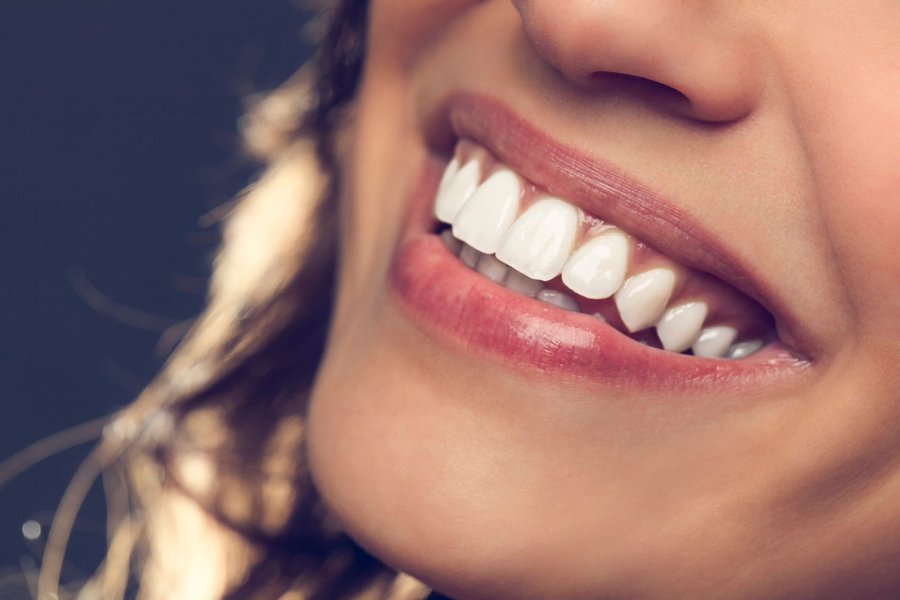
Composite bonding — same-day smile transformation