Patients researching full-arch implant treatment almost always arrive with this question already formed, and usually with an assumption attached: that six implants must be better than four because six is more than four. It is a reasonable instinct, and it is sometimes correct — but it is not the way the decision is actually made in clinic.
Both protocols restore a complete arch of teeth on a fixed, non-removable bridge. Both can be loaded immediately in suitable cases. The choice between them is governed by how much bone you have and where it is, and that is established from a cone beam CT scan before anything else is discussed.
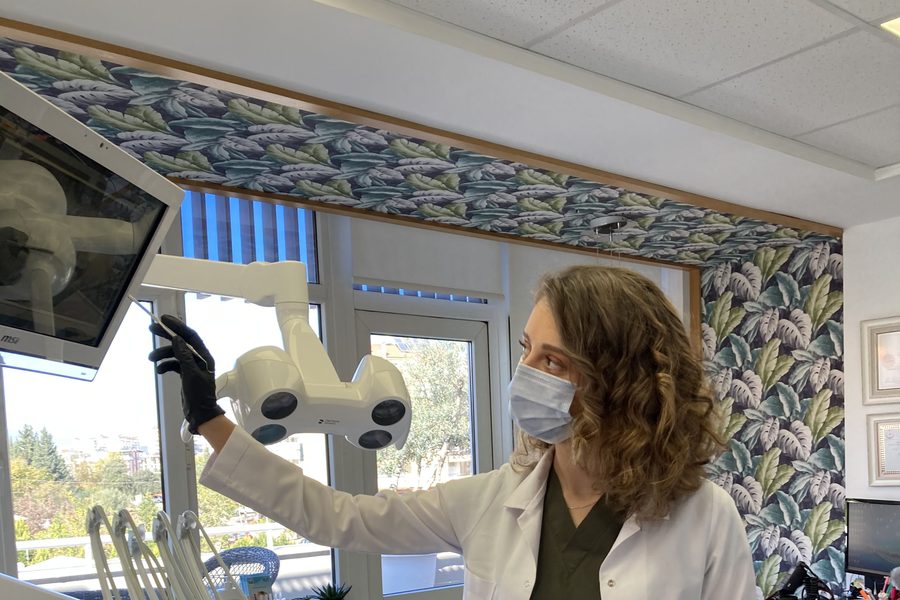
CT-based planning — where the All-on-4 versus All-on-6 decision is actually made
What Each Protocol Involves
All-on-4
Four implants support a full arch. The two anterior implants are placed axially — straight — in the region between the canines, where bone is typically most abundant and best preserved. The two posterior implants are tilted, commonly between 30 and 45 degrees, so that the implant body engages good anterior bone while the head emerges further back in the arch.
That angulation is the entire point of the design. In the upper jaw it allows the implant to pass in front of the maxillary sinus; in the lower jaw it allows it to stay in front of the inferior alveolar nerve. Tilting also lengthens the anterior-posterior spread between the front and back implants, which shortens the cantilever the prosthesis must carry behind the last implant. The result is a protocol that can restore a severely resorbed jaw without bone grafting — which is exactly why Paulo Maló developed it.
All-on-6
Six implants support the arch, typically with more of them placed axially and the load spread across a wider footprint. With two additional support points further back, the cantilever shortens further or is eliminated, and the force on each individual implant is reduced. All-on-6 is the more conventional biomechanical arrangement, and where the bone permits it without grafting, it is generally the more robust one.
The Deciding Factor: Bone
This is where most online comparisons go wrong by treating the choice as a preference. It is not. Posterior bone volume — the height and width of bone behind the canine region — determines what is possible.
In the upper jaw, the maxillary sinus pneumatises downward after teeth are lost, often leaving only a few millimetres of bone below it. In the lower jaw, the inferior alveolar nerve runs through the posterior mandible and cannot be violated. Where posterior bone is deficient, placing two additional upright implants back there requires either a sinus lift or block grafting: additional surgery, additional cost, and an additional healing period of typically four to nine months before implants can even be placed.
So the real comparison is rarely "four implants or six implants". It is more often "four implants now, or six implants after grafting and most of a year of healing". Framed that way, All-on-4 is not a compromise — it is a well-designed solution to a specific anatomical problem.
Where posterior bone is adequate, the calculation reverses and there is little reason not to use six.
Failure Tolerance — The Difference That Matters Most
If there is one genuinely important practical distinction, it is this one, and it is the point I make sure every patient understands before consenting.
Implants occasionally fail to integrate. It is uncommon, but it happens, and it happens more often in smokers, in poorly controlled diabetics, and in cases where primary stability at placement was marginal.
In an All-on-6 case, losing one implant leaves five. In most configurations five implants can carry a modified prosthesis, sometimes with a minor design change, while the failed site heals and is re-treated. The patient generally keeps fixed teeth throughout.
In an All-on-4 case, losing one implant leaves three. Three implants will not reliably support a full arch. The bridge usually has to come out of function, the site is regrafted, a replacement implant is placed, and the patient spends several months in a removable temporary while it integrates. It is recoverable, but it is a significantly more disruptive setback.
This does not make All-on-4 unsafe — long-term data from Maló and colleagues (2011) and subsequent series report high cumulative survival rates for the protocol. It does mean that where a patient carries elevated risk factors for implant failure, and the bone allows six implants without grafting, the additional redundancy is worth having.
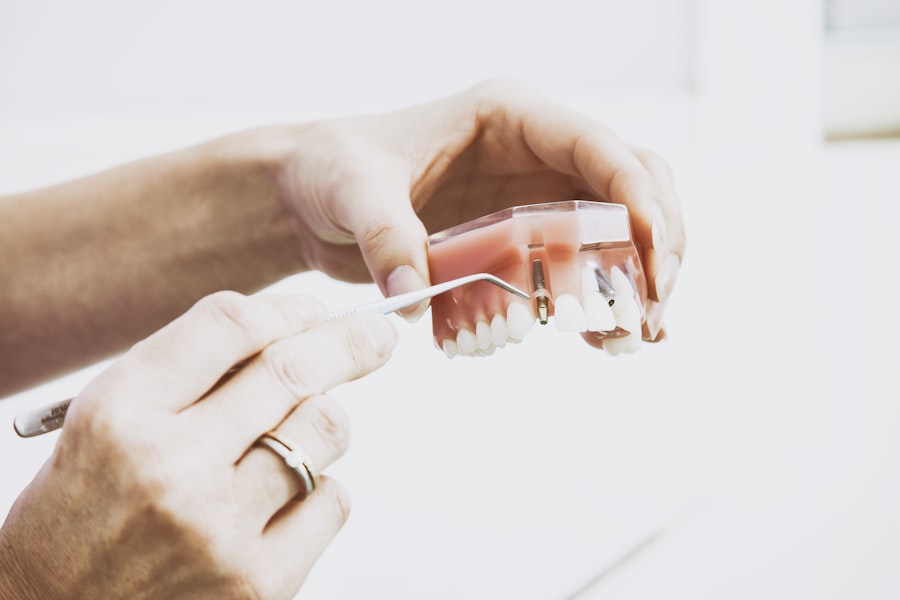
Implant distribution across the arch determines cantilever length and load per implant
Cantilever Length and Biting Force
The cantilever is the portion of the bridge that extends behind the last implant with no support underneath it. Everything you bite on that section levers against the posterior implants.
All-on-4 manages this by tilting the rear implants to push the support point further back, which shortens the cantilever considerably compared with four upright implants. It does not eliminate it. All-on-6 typically shortens it further again, or removes it entirely.
Practically, this affects how many teeth can be safely restored per arch and how much posterior chewing force the prosthesis can take. It also affects long-term maintenance: excessive cantilever load is associated with prosthetic complications such as screw loosening, acrylic fracture and chipping of the veneering material. A well-planned All-on-4 keeps within safe limits. A poorly planned one — too many teeth, too long a cantilever, no bite management — does not, and that is where problems tend to appear a few years in.
Cost
All-on-6 costs more than All-on-4 by the price of two additional implants and two additional abutments per arch. In the UK that is commonly a difference of £2,000–£4,000 per arch; in Antalya the absolute difference is proportionally smaller. The prosthesis itself — the bridge — costs broadly the same either way, since it restores the same number of teeth.
Where cost genuinely changes the picture is grafting. If All-on-6 requires a sinus lift, add the graft procedure, the materials, the additional surgical visit and several months of healing. At that point the total may exceed a straightforward All-on-4 by a considerable margin.
What cost should never do is drive the clinical decision in the other direction. Four implants placed correctly in the bone that exists is a better outcome than six implants forced into bone that cannot hold them. For full pricing including travel, see dental treatment costs: UK vs Turkey.
Which Is Right For You
All-on-4 is typically indicated when
- Posterior bone is significantly resorbed and grafting is to be avoided
- The maxillary sinus has pneumatised into the posterior upper jaw
- You want to avoid a lengthy staged surgical pathway
- Medical factors make additional surgery undesirable
- Treatment needs to be completed within a compressed timeframe
All-on-6 is typically indicated when
- Bone volume across the arch supports six implants without grafting
- You have risk factors for implant failure, such as smoking or diabetes
- You have a strong bite or a history of bruxism
- You are restoring the upper jaw, where bone is softer and load distribution matters more
- You want the greatest margin of safety and the bone allows it
Neither may be right if
- Enough natural teeth remain to be saved and restored individually — see dental implants and crowns
- Active periodontal disease or infection is present and untreated
- Smoking is heavy and ongoing without any intention to reduce
How the Decision Is Made in Practice
A cone beam CT scan is taken and the bone is measured in three dimensions across the whole arch — height, width and density at each proposed implant site, along with the position of the sinus floor and the inferior alveolar nerve. Implant positions are then planned digitally against the intended tooth positions, so the design is driven by where the teeth need to be rather than simply where bone happens to be available.
Only after that does the number of implants get decided. If the scan supports six without grafting, six is usually the recommendation. If it does not, the honest choice is between a tilted four-implant design now and a grafted six-implant design later — and that is a conversation about your priorities, your medical history and your timeframe, not a fixed rule.
Full detail on each protocol is in the dedicated articles on All-on-4 and All-on-6, and completed full-arch cases can be seen in the gallery.
Frequently Asked Questions
Is All-on-6 always better than All-on-4?
No. All-on-6 distributes load more widely and tolerates a failed implant far better, so where bone allows it without grafting it is usually preferable. All-on-4 exists because many patients do not have that bone, and it solves that problem well. The better protocol is the one your anatomy supports.
What happens if one implant fails?
With six, five remaining implants can usually carry a modified bridge while the site is re-treated, and you keep fixed teeth. With four, three remaining implants generally cannot support a full arch, so the bridge comes out of function and you spend several months in a removable temporary while a replacement integrates.
Will I need a bone graft?
For All-on-4, usually not — avoiding grafting is the reason the tilted design exists. For All-on-6, it depends entirely on your posterior bone. If a sinus lift is needed, expect an additional surgical stage and several months of healing before implants can be placed.
Can I have teeth fitted the same day with both?
Yes, in suitable cases. Immediate loading with a fixed provisional bridge within 24–72 hours is possible with either protocol, but it depends on the insertion torque and bone quality measured at surgery. If primary stability is inadequate, loading is deferred — that judgement is made in theatre, not beforehand.
How long do they last?
Published series report high cumulative implant survival for both protocols over ten years and beyond. The implants themselves are generally the durable part; the prosthesis on top is the component that needs maintenance, with acrylic wear, chipping and occasional screw loosening being the common issues. Plan on prosthetic servicing over time regardless of which protocol you choose.
Can I upgrade from All-on-4 to All-on-6 later?
Additional implants can sometimes be placed later if bone permits or after grafting, and the prosthesis remade to engage them. It is not a simple upgrade, though, and it is not a reason to choose four now on the assumption of adding more later. Plan the case properly at the outset.